Home › Commercial Concrete Repair and Restoration
Commercial concrete repair in Columbus, OH keeps your property safe for customers and employees while avoiding costly downtime. We fix spalled joints, settled panels, and cracked slabs in loading areas, sidewalks, and interiors. Our repairs restore function and appearance so you can keep operations moving smoothly.
Superior Concrete Columbus provides professional commercial concrete repair throughout Columbus, OH, Ohio and the surrounding area. Our licensed, insured crew delivers safe, clean, on-time work with a free estimate before anything begins. Call (380) 267-4943 or request your free quote.
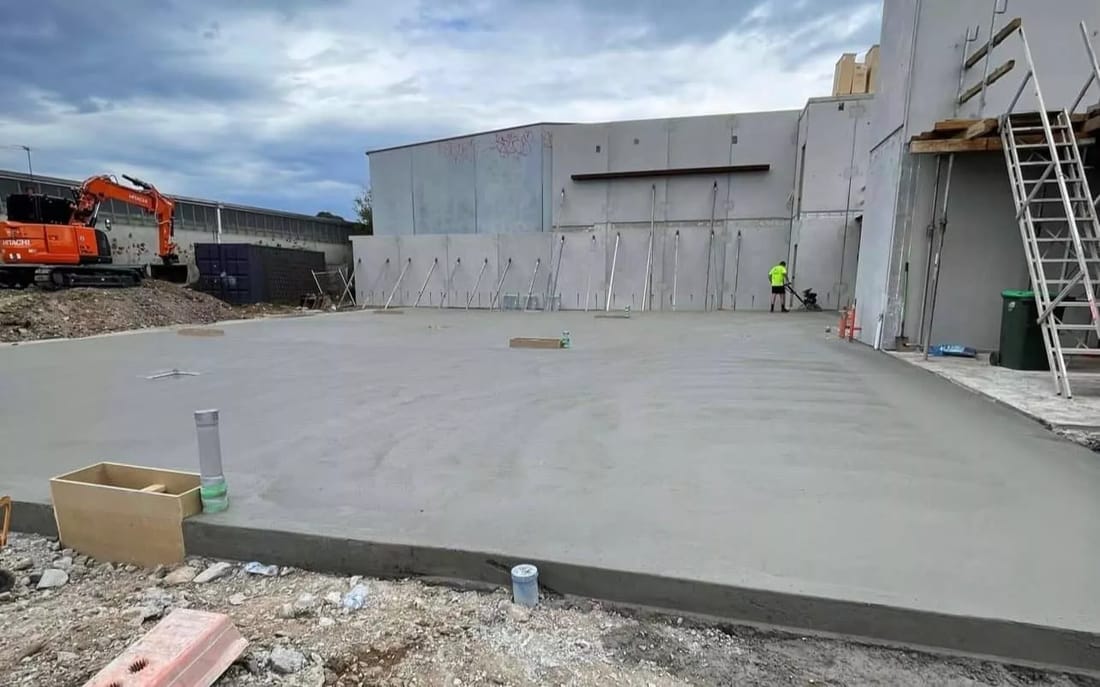
Commercial Concrete Repair for Columbus Facilities
If you manage a property in Columbus, you already know concrete is not just a one-time install. Our freeze-thaw cycles, deicing salts, and heavy traffic are tough on slabs, docks, and foundations. Superior Concrete Columbus focuses on commercial concrete repair and restoration that keeps your property safe, functional, and looking professional without unnecessary replacement.
We work with retail centers, warehouses, medical buildings, schools, office parks, restaurants, and industrial facilities across Columbus and nearby suburbs. Typical projects include trip-hazard sidewalk repairs, loading dock and dock apron restoration, warehouse floor crack repair, parking lot and drive lane panel replacement, and structural and cosmetic repairs around entries and steps.
Before we suggest any fix, we walk the site with you and look at how the concrete is used. A small crack in a light foot traffic area is very different from a spalled joint in a forklift aisle or a heaved panel at a storefront. We ask about water drainage, snow removal practices, forklift or truck routes, and any previous repairs so we understand why the damage happened in the first place. That way, we can target the cause as well as the symptom and you get a repair that holds up instead of a quick patch that fails next winter.
How Our Commercial Concrete Repair & Restoration Process Works
Our process is straightforward and built around minimizing disruption to your tenants, customers, and operations.
1. Assessment and testing: We start with a visual inspection, tapping suspect areas to identify delamination. For serious issues, we may recommend core samples or non-destructive testing to check slab thickness, rebar condition, or moisture levels. In cold months around Columbus we also pay close attention to heaving from frost and damage from deicers.
2. Planning and phasing: Once we know what is going on, we outline options. For example, a cracked slab at a loading dock might be handled as a partial depth repair, full panel replacement, or overlay. We break the work into phases so a portion of your lot, dock, or interior floor remains usable. For retail and medical, we often schedule noisy or access limiting work early morning, evenings, or weekends.
3. Surface preparation: The quality of any repair depends on how well we prep. We sawcut the repair perimeter, chip or mill away loose or weak concrete, clean rebar, and shotblast or mechanically grind bonding surfaces. Joints and cracks are cleaned with compressed air or vacuum, not just swept, so repair materials adhere properly and contaminants like oil and deicing residue do not compromise the fix.
4. Repair and restoration: Depending on the location and loading, we may use high early strength repair mortars, fiber reinforced mixes, structural patching compounds, or standard ready mix concrete. For slabs that must open quickly, we use rapid setting materials that reach traffic strength in hours, not days. Where joints have failed, we rebuild the joint shoulders, install proper backer rod, and use commercial joint sealants that resist traffic and chemicals.
5. Finishing, curing, and protection: We match the finish to its use broom, trowel, or slip resistant textures. For interior floors, we can blend repairs with existing polish levels so the patch does not stand out. Curing is critical in Ohio’s variable weather, so we use curing compounds, blankets, or cold weather mixes as needed. If appropriate, we recommend sealers or coatings to protect against salts, forklift traffic, or chemicals.
6. Final walkthrough and maintenance plan: We close with a walkthrough to verify slope, drainage, and joint alignment. Then we discuss realistic maintenance steps, such as how soon to reapply sealer, what deicers to avoid, and how to monitor cracking so you can address issues before they become structural problems.
Repair Options, Materials, and What Drives Cost
There is no one-size-fits-all solution for commercial concrete repair, and cost can vary a lot based on how we approach the problem. Superior Concrete Columbus takes time to explain options so you can make the right call for your budget and operations.
For flatwork like parking lots, drive lanes, and pads, you typically choose between localized patching, panel replacement, or overlays. Localized patching uses high performance repair mortars or concrete in isolated damaged spots and is usually the lowest upfront cost. Panel replacement involves cutting out and replacing entire sections, which is more expensive but often the best long-term fix when the base is failing or there is extensive cracking. Overlays, such as bonded toppings or polymer modified resurfacing systems, can refresh large areas with moderate damage while keeping the existing slab.
For structural and vertical elements, such as loading dock walls, stairways, retaining walls, and columns, we often use polymer modified repair mortars that bond tightly to existing concrete. If rebar is corroding, we clean and treat or replace it, then encapsulate it within new concrete or repair mortar. In some cases we add carbon fiber reinforcement or steel plates to increase capacity without a full replacement.
Cost is driven by access, thickness, and traffic loads. Work in busy downtown Columbus sites with limited access or night-only work windows will cost more than work at an open industrial park because staging and traffic control take more labor. Areas that carry semi trucks or heavy forklifts need thicker sections, stronger mixes, and more reinforcement, which increases material cost. Weather can affect cost as well, since winter work may require heated enclosures, accelerators, or more labor to manage curing.
We also consider aesthetics and safety. Slip resistant finishes, color matching, and line striping add cost but may be important at entrances or customer areas. Where ADA compliance is a concern, we factor in grading, ramp slopes, and detectable warnings. All of this is spelled out in our quote so you understand why one solution might be cheaper upfront but more expensive if you look at the next 10 years.
Common Columbus Concrete Problems and How We Fix Them
Commercial properties in Columbus see a particular set of concrete issues because of our freeze-thaw cycles, heavy snowplow use, and deicing chemicals.
Freeze-thaw cracking and scaling: Water enters small pores and cracks, then expands as it freezes. Over time, this causes surface scaling and larger cracks. Our fix usually involves removing loose material, applying a low-shrink repair mortar or new concrete, then sealing the surface or installing a protective coating. For high traffic areas, we specify air entrained concrete mixes that are more resistant to freeze-thaw stress for any new or replacement sections.
Salt and chemical damage: Deicing salts and certain industrial chemicals can attack the concrete surface and corrosion of embedded steel. After we remove deteriorated concrete and clean or replace rebar, we often use corrosion inhibiting primers or migrating corrosion inhibitors where appropriate. Sealers that resist chloride penetration are recommended around parking stalls, entrances, and loading docks, especially where snow piles are placed.
Joint spalling and curled slabs: Repeated traffic and improper joint design can cause edges of slabs to break away, which is a common problem in warehouse aisles and drive lanes. Our repair approach is to sawcut and remove damaged concrete, stabilize the base if it is pumping or soft, rebuild the joint shoulders with high strength repair material, then reseal the joints with a traffic grade sealant. For curled slabs or differential settlement, we may recommend slab stabilization techniques such as pressure grouting or partial replacement combined with better load transfer devices.
Heaving, settlement, and drainage issues: Poor drainage, downspouts that dump onto concrete, and subgrade movement can lead to settled or heaved panels. Before we repair the slab, we address where the water is going. Sometimes the best solution is regrading, adding drains, or relocating downspouts. We may then lift settled slabs with slabjacking (where appropriate) or remove and replace sections on a compacted, properly drained base.
Cosmetic deterioration at high visibility areas: Office entries, hotel porte cocheres, and restaurant patios often suffer from pitting, stains, and surface defects more than structural damage. In these cases, we can grind, resurface, and, if desired, add decorative finishes or colored sealers so the space presents better to guests without a full rebuild.
What Columbus Property Managers Should Know Before Hiring
Choosing the right contractor for commercial concrete repair is as important as choosing the repair method itself. Here are a few items we suggest every Columbus property manager or facility owner consider.
Check experience with active sites: Commercial repair is different from new construction. You want a crew that understands working around tenants, patients, customers, and trucks. At Superior Concrete Columbus we plan access routes, signage, and staging so fire lanes stay open, ADA paths remain available where possible, and delivery schedules are respected.
Ask about seasonal planning: In central Ohio, spring and fall are prime times for concrete work, but they also book up fast. Winter work is possible with the right materials and protection, although costs and scheduling needs change. We will talk honestly about whether a repair should wait for a better weather window or if it can be done safely and effectively right away.
Request a clear scope and warranty: Any proposal should spell out surface preparation, material types, thicknesses, joint treatment, curing methods, phasing, and cleanup. Vague descriptions often mean corners will be cut. We outline each step and include realistic start and completion windows, especially important when coordinating with other trades or tenant move-ins. We also review warranty terms in plain language so you know what is covered.
Discuss long-term maintenance: A good contractor will not just fix the concrete and disappear. We explain how to extend the life of your repairs, including recommended sealing schedules, appropriate deicers, and what small issues to watch for so you can call us before they become large problems. Many Columbus clients opt for annual or biannual walk-throughs where we identify minor repairs that can be bundled together for cost savings.
If you would like to talk through a potential project, Superior Concrete Columbus is ready to walk your site, provide a detailed assessment, and design a commercial concrete repair and restoration plan that fits your operations and budget.