Home › Commercial Concrete Slabs and Flatwork
Commercial concrete slabs in Columbus, OH carry heavy loads and equipment, so they must be flat, strong, and durable. We pour warehouse floors, loading docks, and exterior flatwork that meet design requirements. Our crews use proper reinforcement, joint layout, and finishing to control cracking and deliver long lasting performance.
Superior Concrete Columbus provides professional commercial concrete slab throughout Columbus, OH, Ohio and the surrounding area. Our licensed, insured crew delivers safe, clean, on-time work with a free estimate before anything begins. Call (380) 267-4943 or request your free quote.
Commercial Concrete Slabs in Columbus Built for Real-World Use
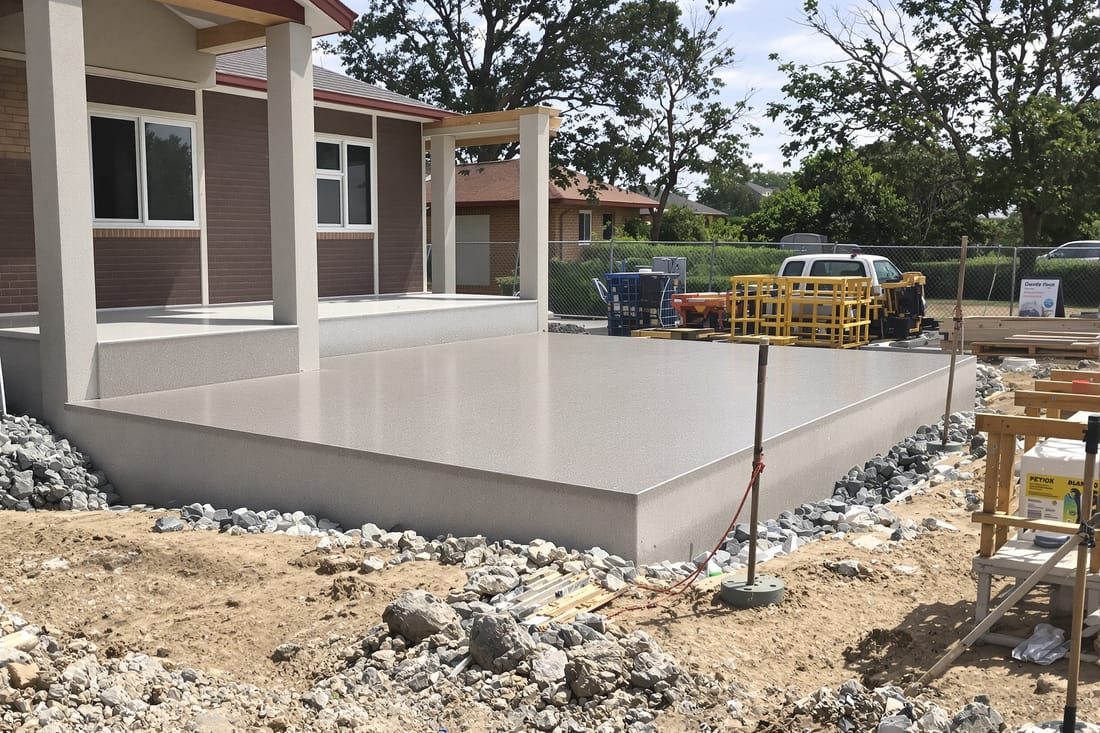
When you are investing in a commercial concrete slab in Columbus, you are not just buying a flat surface. You are buying the foundation that will carry forklifts, storage racks, delivery trucks, foot traffic, and in many cases, your entire operation. At Superior Concrete Columbus, we focus on how your slab will actually be used so we can design the thickness, reinforcement, and finish to match your day to day reality.
For retail and office builds, we usually design slabs in the 4 to 6 inch range with welded wire mesh and strategic control joints that limit cracking. For warehouses, light industrial, and loading areas, we often move to 6 to 8 inches, sometimes thicker, and switch to rebar grids or doweled joints that handle higher point loads and forklift traffic. If you already have racking layouts or heavy equipment footprints, we encourage you to share them with us so we can account for wheel paths, column loads, and turning areas when we size and reinforce the slab.
Columbus weather matters more than most people think. Our freeze thaw cycles and deicing salts can be brutal on poorly designed concrete. We typically use a 4000 to 4500 PSI air entrained mix for exterior commercial flatwork such as sidewalks, aprons, and loading docks, because the entrained air helps relieve internal pressure when water freezes. For interior slabs that will receive floor coverings, we adjust the mix and curing methods to control moisture and curling so your future flooring installer does not run into problems with adhesives or surface flatness.
Instead of a one size fits all approach, Superior Concrete Columbus looks at the entire picture: soil conditions, expected traffic, drainage, and your timeline. That way, we are not just pouring concrete, we are building a slab and flatwork system that keeps your doors open and your maintenance headaches low for years.
How We Build Commercial Slabs and Flatwork, Step by Step
Commercial concrete flatwork is only as good as the preparation under and around it. Our crews start by stripping topsoil and any unstable fill, then proof rolling the subgrade with equipment that reveals soft spots. In the Columbus area, we often encounter clay that holds water, so we cut out weak pockets and replace them with compacted aggregate so the slab does not settle or heave later.
After grading, we place a compacted stone base, typically 4 to 8 inches of crushed limestone, and compact it in lifts. This base layer helps spread loads, improves drainage, and protects the concrete from direct contact with wet soil. For interior slabs that will receive sensitive finishes, we usually add a vapor barrier, usually a 10 to 15 mil poly, to help control moisture moving up through the slab.
Next, we set forms and layout. This is where accuracy matters. We laser check elevations so your slab meets design tolerances for flatness and slope, especially around drains, ramp transitions, and door thresholds. Reinforcement is then installed, either welded wire mesh supported on chairs or a grid of rebar tied and kept at the correct depth in the slab. For high traffic joints, such as where a slab meets a dock or overhead door, we often use dowels or keyways to help keep sections aligned and minimize joint spalling.
Once ready, we schedule the pour around the weather. In central Ohio, that often means early morning placements in summer to stay ahead of heat and afternoon storms, and careful monitoring of forecasts in spring and fall to avoid sudden cold snaps. We place concrete using chutes, pump trucks, or conveyors depending on site access, then strike off and screed to grade. For many commercial interiors we use power screeds and laser-guided equipment to achieve tight flatness specs.
Finishing depends on purpose. A warehouse slab may receive a hard trowel finish for durability and easy cleaning. Exterior sidewalks and entries get a broom finish to provide traction in wet or icy conditions. If the slab will be polished or receive special coatings, we coordinate with you and other trades to get the right surface profile from the start.
Local Conditions, Timing, and What Affects Your Project Cost
Many business owners ask why commercial concrete slab pricing can vary so much. In Columbus, cost is driven by three main factors: design thickness and reinforcement, site conditions, and schedule or phasing needs.
Thicker slabs with heavier reinforcement cost more in materials and labor, but sometimes they save money long term by reducing joint repairs, slab replacement, or equipment downtime. A light duty 4 inch slab for a small storefront build out will be less expensive than an 8 inch slab with doweled joints designed to carry loaded forklifts in a distribution facility. We talk through your use case so you are not overbuilding or underbuilding.
Site conditions in central Ohio can also influence cost. Poor drainage, soft subgrade, buried debris, or the need for underdrains can add preparation work. For example, if we find saturated clay that pumps when we drive equipment over it, we may recommend undercutting and replacement with compacted aggregate. It adds upfront cost, but it prevents slab settlement and reflective cracking that would be far more expensive to correct later.
Seasonal timing plays a role too. In winter, cold weather concreting can require heated enclosures, insulated blankets, and non chloride accelerators to reach strength in time. All of that increases labor and material cost. In summer, we must control rapid evaporation to avoid surface cracking and scaling, which may mean more crew, more curing compounds, and careful scheduling. If you have a tight production or opening date, we can phase work so key areas are usable sooner, but staging and mobilizing multiple times can affect the budget.
To keep surprises to a minimum, Superior Concrete Columbus performs a site walk, reviews any available plans or soil reports, and discusses access and staging constraints before finalizing our proposal. You get a clear scope that calls out slab thickness, reinforcement type, joint layout approach, and curing method, not a vague line item that is hard to compare with other bids.
Common Slab Problems We Prevent and How We Fix Existing Issues
If you already have an aging commercial slab or exterior flatwork around Columbus, you have likely seen curling edges, cracked panels, spalled joints, or settled sections that pond water or trip employees. Many of these issues start with poor subgrade prep, insufficient joints, or mixes that did not match our climate.
When we build new work, we prevent these problems through careful joint design and curing. We locate control joints based on slab thickness, usually in a grid pattern that keeps panels as close to square as possible, and saw cut them at the right depth and timing so the slab cracks where it is supposed to. For interior joints in forklift aisles, we specify load transfer devices and joint fillers to reduce edge chipping and vibration.
Curing is another step that gets skipped on rushed projects. In our freeze thaw Columbus environment, uneven or inadequate curing can lead to scaling and dusting. Superior Concrete Columbus applies curing compounds or uses wet curing methods, depending on finish and future floor coverings, so the slab gains strength evenly and retains surface durability. For slabs that will be polished, we coordinate with the polishing contractor so our curing methods do not interfere with later grinding and sealing.
If you already have failures, we can help assess whether concrete repair or replacement makes more sense. Minor surface spalling and small cracks can often be addressed with patching materials and joint resealing. Significant settlement, heaving from tree roots, or repeated joint blowouts may call for slab replacement in affected panels. In that case, we cut and remove only the damaged sections, repair the base, tie into existing reinforcement where needed, then place new concrete that matches the surrounding elevation and finish.
We also take drainage seriously. A flat slab that looks perfect today can start ponding water near doors or curbs if surrounding grades change or if nearby asphalt settles. On exterior commercial flatwork we build in subtle slopes toward drains and check final elevations carefully so meltwater from Columbus snowstorms heads to a drain, not inside your building.
Planning Your Project With Superior Concrete Columbus
A successful commercial concrete slab project in Columbus starts well before the first truck arrives. Our team begins with questions about your use: What equipment will run on the slab, what floor finishes are planned, will you have pallet racking, freezers, or chemical storage, how critical are tolerances for machine anchors or conveyor lines? The answers shape our design and help prevent expensive surprises later.
On new construction, we coordinate with your general contractor, engineer, or architect to align with the structural design, plumbing and electrical layouts, and future build out plans. For renovations or tenant improvements, we help you evaluate what can stay and what must be removed or thickened. If interior slab work must be done while your business stays partially open, we develop a phasing plan that keeps access paths and egress routes functional and safe.
During the job, communication is straightforward. We confirm pour dates based on the weather and your schedule, let you know when areas can handle foot traffic and when they can support equipment, and provide guidance on when racks, vehicles, or heavy machinery can be brought onto the slab. We also share maintenance tips, such as avoiding harsh deicers on new exterior flatwork for the first winter and how to clean troweled or broom finishes without damaging the surface.
When the work is complete, you have a commercial concrete slab and flatwork system tailored to your building and Columbus conditions, not a generic slab poured to a lowest cost spec. If you are planning a new warehouse, retail build out, production space, or exterior loading improvements, Superior Concrete Columbus is ready to walk your site, review your plans, and put together a straightforward proposal that explains exactly what you are getting and why it fits your needs.